Bio-inspiration and soft structures
Observing the living world to imagine other ways of moving, grasping and interacting.
A fully-fledged sub-domain
This page and its contents remain accessible. They are attached to the domain AI and robotic technologies. Bio-inspiration and soft robotics are cross-cutting approaches, with medical, agricultural or mobility applications.
Definition and uses
The CNRS presents research inspired by animals such as insects and birds. The interest lies in understanding principles useful for robot design. A resemblance to an animal alone does not demonstrate better performance.
Explore the domain in depth
When the structure deforms
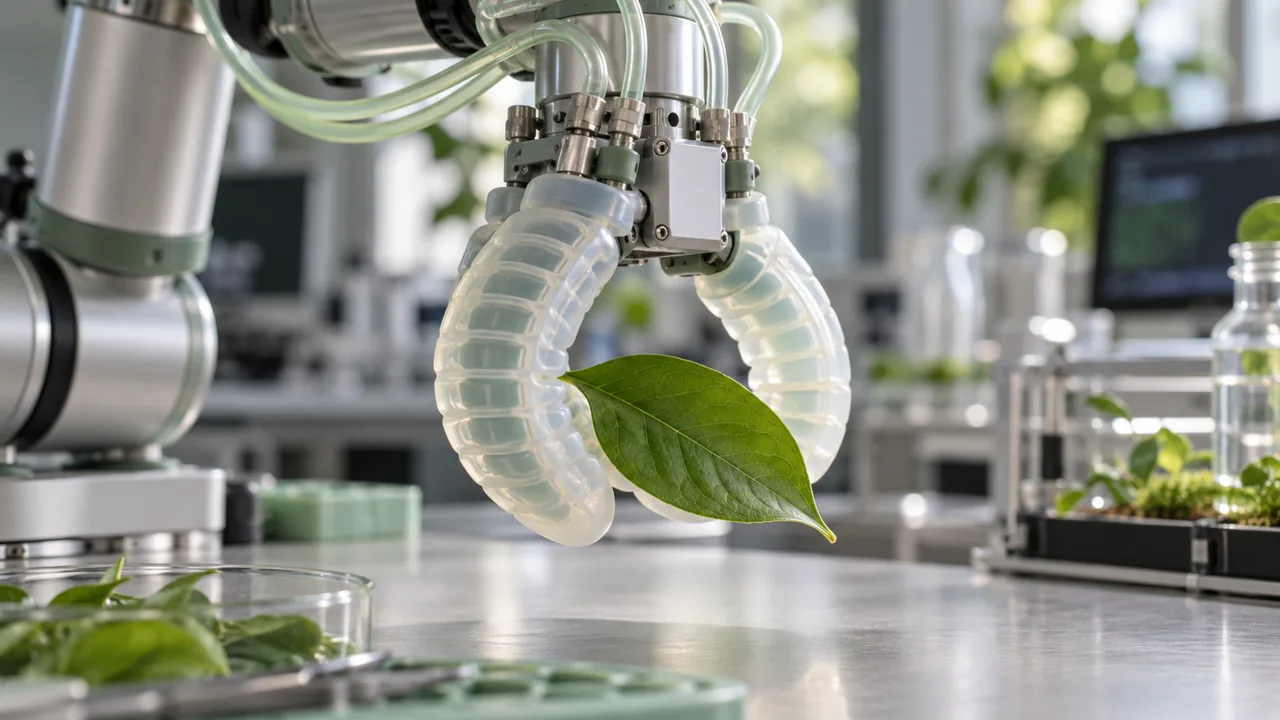
Soft robotics explores deformable materials and structures. The baromorphs described by the CNRS use networks of channels and pressure to produce shape changes. This work illustrates an approach other than the assembly of entirely rigid parts.
From experiment to application
A publication or laboratory prototype is not a product validated for all uses. Our articles separate the mechanism studied, the experiment results and the envisioned applications. Publication dates remain visible to avoid presenting old research as a new discovery.
History and lineages
The bio-inspired branch explores several ideas: reproducing a function of the living world, a shape or a collective behavior. Soft robots represent one of these avenues, without summing up all of bio-inspiration.
Find this branch in the general tree →Domain news
Dossier of September 2, 2026 · 2025 video · CNRS Le journal · public researchThe CNRS explores robots inspired by the living world
The CNRS dossier “Le siècle des robots” features a video on bio-inspiration. The video was produced in 2025: this marker is kept to distinguish the recent dossier from the date of the work presented.
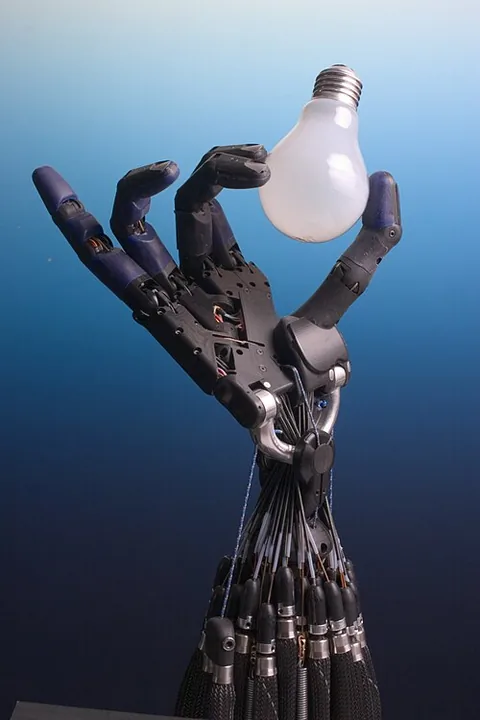
Credit: Richard Greenhill and Hugo Elias / Shadow Robot Company · 2007 · Original photo ↗ · CC BY-SA 3.0 ↗
Adaptation: resizing and WebP conversion. Images under CC BY-SA retain this license.
Current legal aspect
The material alone does not determine the applicable law
Bio-inspiration or the softness of a robot do not create a single legal category. A system falls under the framework tied to its use: machine, medical device or other product. Trials and risk prevention remain to be examined for each application.
Professional paths
Choose a path by length of study, then explore the training courses and their institutions. These thematic groupings do not constitute job offers.
Sources and references
References consulted on 4 October 2026.
- CNRS Le Journal — Bio-inspired robots ↗Public research
- CNRS Images — Robots inspired by nature ↗Scientific media library
- CNRS — Baromorphs ↗Research presentation, 2018