AI and robotic technologies
How to connect perception, learning and action in a machine that interacts with the physical world.
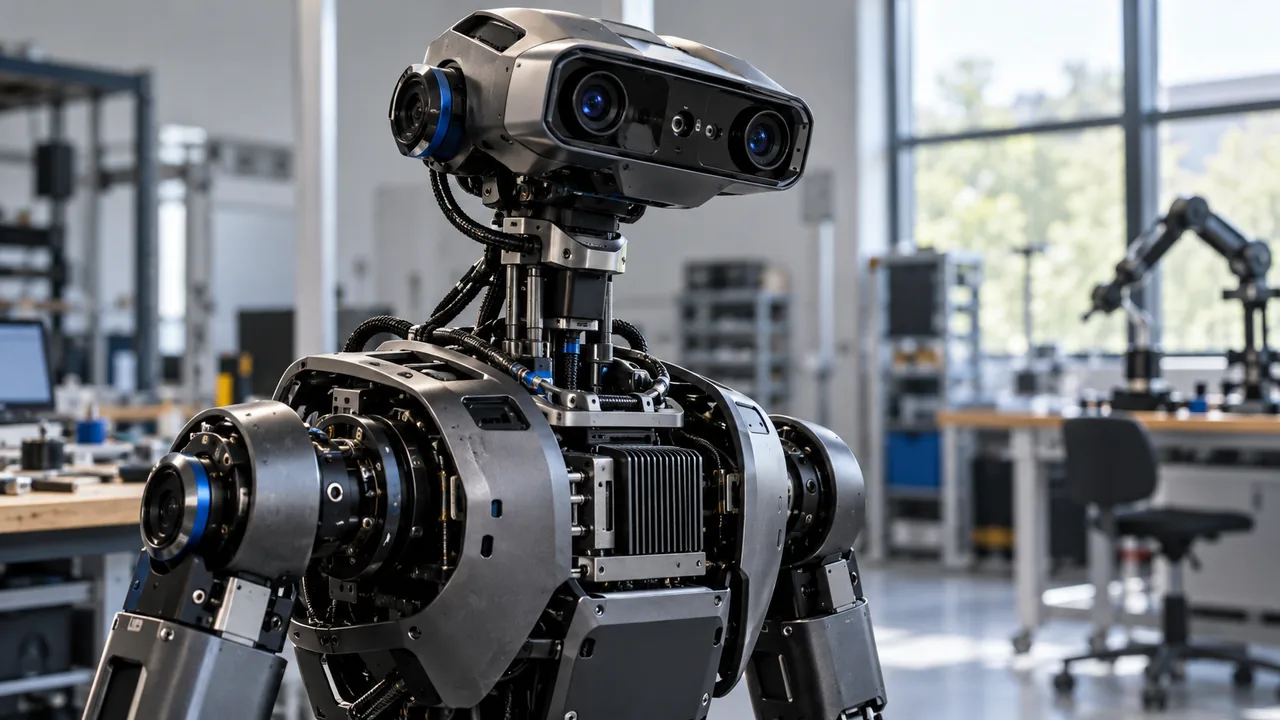
The sub-domains of this page
Artificial intelligence, vision, embedded systems, mechatronics, bio-inspiration, and soft robotics.
Cross-cutting technologies and methods, linked to application domains rather than presented as exclusive uses.
Bio-inspiration borrows principles from living organisms; soft robotics studies in particular deformable structures. They overlap without being synonymous. Explore their cross-cutting report →
Definition and uses
Robotics combines movement, perception and control. Inria’s educational path helps understand this articulation. A conversational capability alone is not enough to establish that a robot can manipulate objects or act reliably in a real environment.
Explore the domain in depth
Learn and interact
The work presented by the Flowers team explores in particular learning and interactions between humans and robots. To judge a result, one must look at the task tested, the conditions of the experiment and its limits, rather than attributing general intelligence to the machine.
Data and responsibility
When personal data is processed, the requirements of the GDPR remain relevant. The CNIL publishes guidelines for aligning AI development and data protection. The European regulation on AI adds a framework whose obligations depend on the system and its use.
History and lineages
From electronic turtles to vision-language-action models, discover how machines learned to perceive, plan and act. A documented timeline traces the major milestones of AI and cognition, distinguishing scientific foundations, prototypes and commercial applications.
Explore the history of AI and cognitive robotics →
Find this branch in the general tree →Domain news
Neuron AI: vision, touch and memory in the service of robots
Our article examines NEURA Robotics’ announcement and the criteria that will make it possible to assess its real capabilities.
ASTRA: coordinating a robot team’s decisions
The NASA ASTRA trial explores how tasks are distributed among robots according to scientific interest and risks. This research work helps understand collective autonomy and the role of goals set by humans.
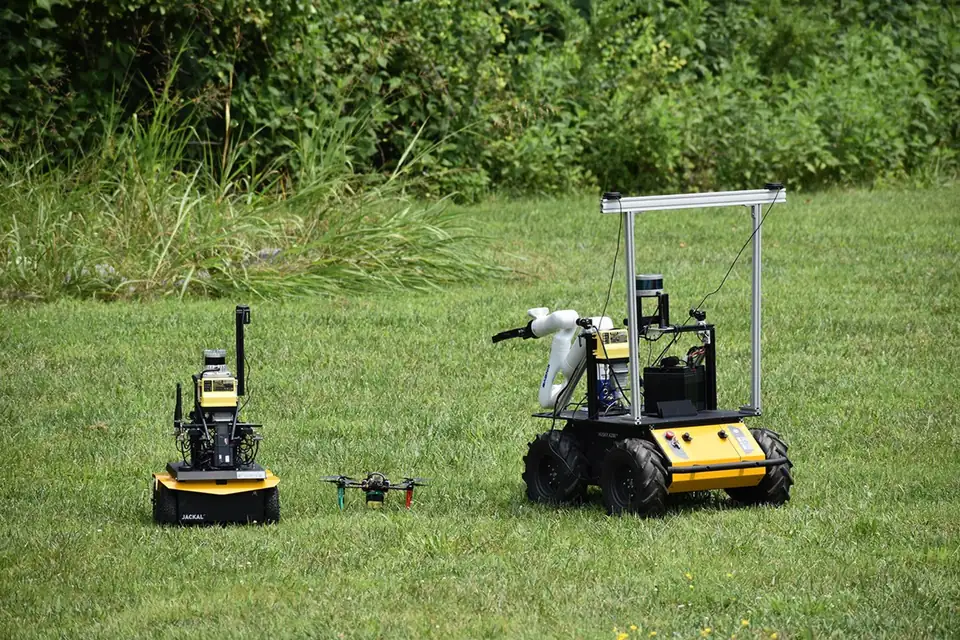
Credit: NASA / Bethany Theiling · July 2026 tests · Original photo ↗ · Editorial reuse authorized by NASA ↗
Adaptation: resizing and WebP conversion. Images under CC BY-SA retain this license.
Current legal aspect
AI, transparency and personal data
The AI Act applies in stages and depending on uses. The Commission notably indicates transparency obligations since August 2026; the deadlines for high-risk systems differ according to their category. The GDPR remains relevant when a robot processes personal data.
Professional paths
Choose a path by length of study, then explore the training courses and their institutions. These thematic groupings do not constitute job offers.
Sources and references
References consulted on 4 October 2026.
- Inria Learning Lab — Robotics fundamentals ↗Public research and education
- Flowers — Research presentations ↗Research team
- CNIL — AI and GDPR ↗French data protection authority