Agricultural robots promise to revolutionise farmers’ daily lives: greater productivity, less physically demanding work, and above all, more time for themselves and their families. These attractive prospects are encouraging some farmers to invest in increasingly sophisticated machines. Yet behind this modernisation lies a less appealing reality: equipment costs, maintenance expenses, and bank loans can turn the promise of freedom into a new form of dependence.
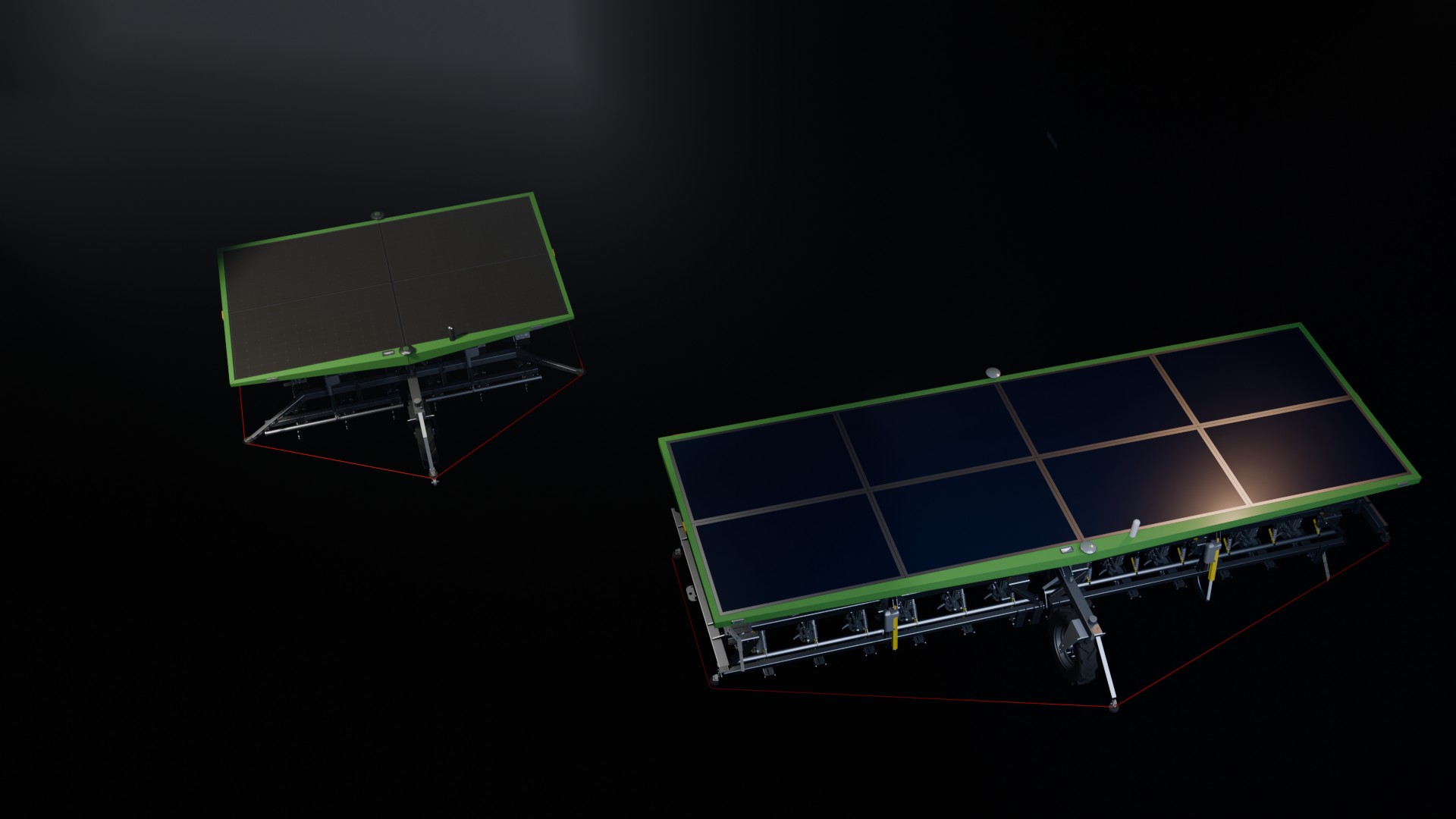
Agricultural robotics is no longer a mere technological curiosity. According to an analysis published by the French Ministry of Agriculture in September 2026, France had around 14,000 milking robots in 2023 and more than 4,000 other robots in use on livestock farms. Deployment in crop farming remains more limited but is growing: around 600 field robots were operating in 2023, compared with about 100 in 2018. The figures point to a genuine shift, even though fully robotised agriculture is still far removed from the daily reality of most farmers.
A revolution that could transform farmers’ lives
Farms have no shortage of repetitive, physically demanding tasks. Weeding, sowing, crop maintenance, feeding animals, and milking cows all shape working days that are often long. It is precisely in these areas that robots are beginning to demonstrate their value. Companies such as Naïo Technologies and FarmDroid have developed machines capable of carrying out certain agricultural tasks with reduced human intervention. Using high-precision satellite positioning, sensors, and, depending on the model, computer vision, these robots can follow crop rows and operate with precision.
The benefits are not limited to comfort. Under certain conditions, robotic mechanical weeding can reduce herbicide use, while electric machines that are lighter than some conventional tractors can help limit soil compaction. On dairy farms, milking robots offer farmers some relief from fixed milking schedules while monitoring each animal individually. For a farmer facing labour shortages, these technologies can represent real progress.
But automation should not be confused with the disappearance of work. A robot still requires supervision, maintenance, and sometimes unforeseen intervention. A breakdown, a navigation error, or a field made impassable by weather conditions can quickly put the farmer back at the centre of operations. The time freed up by a machine is therefore not automatically time gained for personal life. It may instead be devoted to other tasks, expanding the farm, or managing the new equipment.
Explore the guide to agricultural robotics
Progress comes at a price—and sometimes a very high one
This is where the technological promise meets economic reality. According to a summary published by the French Ministry of Agriculture in February 2025, robots intended for crop production represented an average investment in the region of €160,000 in data presented at an AgroTIC seminar. This figure is an order of magnitude, not a price that applies to every model. Maintenance contracts, repairs, software updates, subscriptions, and training may all add to that amount.
Financing these machines may require a loan or leasing arrangement. Yet French agriculture already operates in a financially constrained environment. According to Agreste data for 2024, the average debt ratio of farms stood at 42.1%. This figure covers all their debt, not specifically investments in robotics. It nevertheless highlights how difficult it can be to take on new fixed costs when income fluctuates with harvests, markets, and weather events.
A study by the French Livestock Institute, cited by the Ministry of Agriculture in 2026, illustrates this paradox particularly well. Over the long term, farms equipped with milking robots achieve profitability comparable to that of farms using conventional milking parlours. When economic conditions are favourable, higher productivity can generate more income. During difficult periods, however, the additional investment can leave the farm more vulnerable.
In other words, producing more with a robot does not necessarily mean earning more money. Everything depends on the initial investment, the savings actually achieved, how intensively the machine is used, and the farm’s ability to absorb bad years.
A second, less visible form of dependence is also emerging: reliance on manufacturers and technology providers. Proprietary software, model-specific spare parts, agricultural data hosted on external platforms, and subscription-based services can limit a farmer’s freedom. Buying a robot does not always provide complete control over how it operates. This issue becomes particularly sensitive when essential equipment depends on the availability of after-sales service or manufacturer updates.
What if sharing robots were the answer?
Fortunately, agricultural robotisation does not rely solely on individual purchases. Agricultural machinery cooperatives, known in France as CUMAs, as well as rental and service providers, offer other ways of gaining access to these technologies without bearing the entire cost alone. Sharing allows several farms to divide the expense and make better use of equipment that may be needed only at certain times of the year.
This approach has its own constraints, however. Farm work often depends on short weather windows, and several farmers may need the same robot at the same time. Transport, maintenance, and responsibility for its use must also be organised. Nevertheless, the French National Federation of CUMAs points to the growing value of equipment sharing as mechanisation costs rise.
Independent performance assessments could also help farmers invest more wisely. The French AGROBOSCOPE project plans to begin on-farm trials in 2027 to produce objective benchmarks for robot performance under different operating conditions.
NewsRobotique’s view: modernising agriculture without sacrificing independence
Agricultural robotics has considerable potential. It can ease farmers’ workloads, facilitate certain practices that are more respectful of the environment, and help address very real recruitment difficulties. But this technological revolution must not become a permanent race for equipment in which every productivity gain comes with a new loan.
The true success of agricultural robotisation should not be measured solely by the number of hectares worked or labour hours saved, but also by farmers’ ability to preserve their income, expertise, and independence.
After all, what is the point of owning a robot that can work in our place if we have to work even harder to pay for it?
Main sources: French Ministry of Agriculture, analysis dated 9 September 2026; Agreste, 2024 farm economic results published in December 2025; French National Federation of CUMAs, June and September 2026; French Ministry of Agriculture, agricultural robotics monitoring report, February 2025.