Military and security robotics
Reconnaissance, remote intervention and human-machine collaboration: understanding the uses without confusing robotization and autonomy.
The sub-domains of this page
Defense, security, hazardous inspection, and rescue.
Protection, observation or intervention missions: military and civilian uses remain distinguished.
Definition and uses
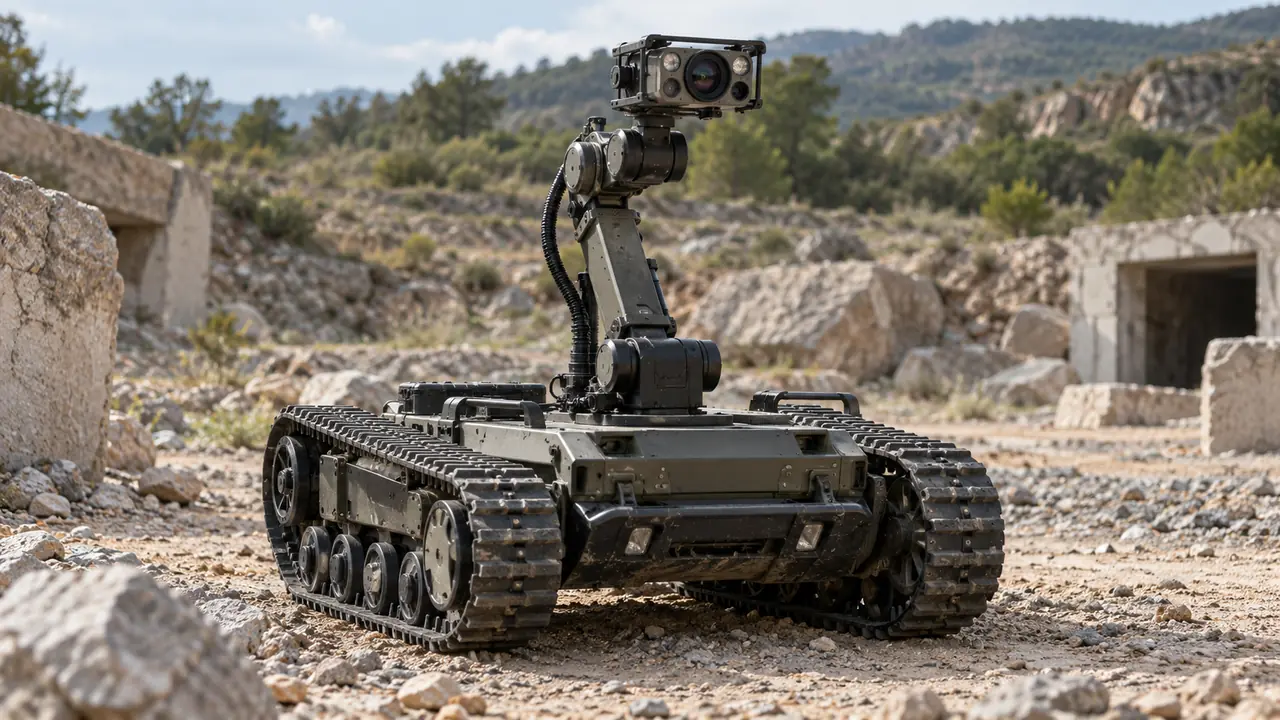
The French Army presents ground robots intended in particular for reconnaissance and remote intervention. These examples show the diversity of missions. They do not allow the conclusion that all platforms make decisions without human intervention.
Explore the domain in depth
The operator’s place
Teleoperation, mobility, energy and human-machine collaboration are among the themes of the CoHoMa challenge. Our dossiers distinguish announced capabilities, trials and equipment described by institutions. A ministerial source presents the point of view of the institution concerned.
The questions to ask
What is the human role? In what environment was the machine evaluated? What status does the program have? These questions make it possible to read announcements with caution. Legal analysis must be tied to the precise use; the word “robot” alone does not constitute a single regulatory category.
History and lineages
From Tesla’s radio-controlled boat in 1898 to current experiments, this history traces the evolution of reconnaissance, demining, transport and intervention machines. It distinguishes teleoperation, automatic systems and autonomy, as well as prototypes, trials and operational uses.
An interactive timeline brings together 30 milestones in seven periods, with a focus on France: PAP 104, Harfang, FURIOUS, CoHoMa and SLAM-F. Each record links to its documentary references.
Explore the historical timeline →
Find this branch in the general tree →Domain news
April 15, 2026 · AID · Ministry of the Armed ForcesCoHoMa 4: an upcoming human-machine collaboration challenge
The AID presents the fourth edition of CoHoMa, whose demonstration is scheduled from June 15 to July 1, 2027. The announcement concerns a program for experimenting with drones and ground robots, without establishing their future performance.
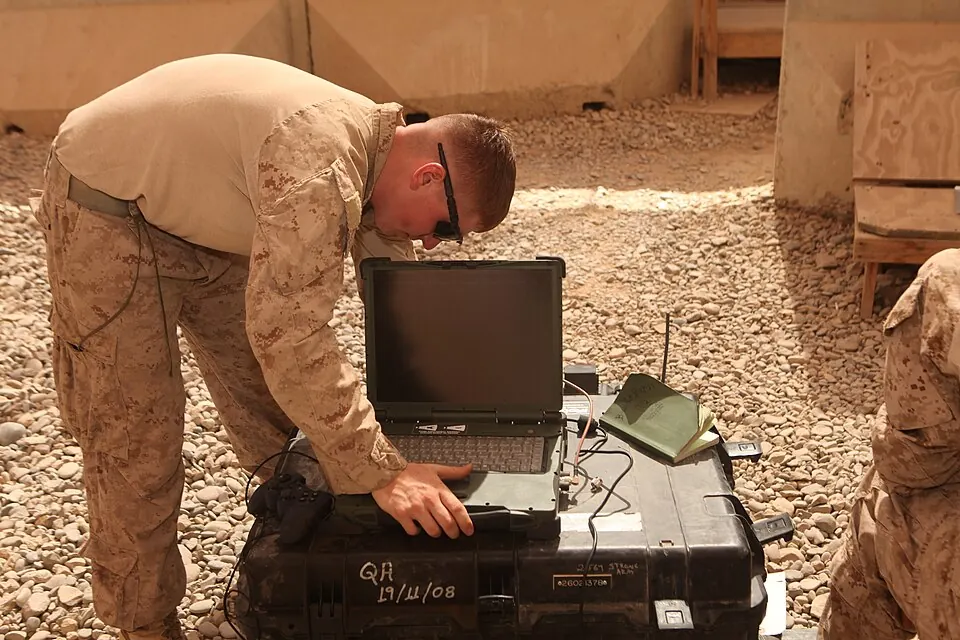
Credit: Lance Cpl. Cesar Contreras / U.S. Marine Corps · August 28, 2012 · Original photo ↗ · Public domain · official work of the United States government ↗
Adaptation: resizing and WebP conversion. Images under CC BY-SA retain this license.
Current legal aspect
Do not confuse the civilian framework and military uses
The status of the system, its mission and the user matter. The civilian framework for machines or AI does not automatically carry over to military missions. Each challenge’s rules also set conditions specific to the experimentation.
Professional paths
Choose a path by length of study, then explore the training courses and their institutions. These thematic groupings do not constitute job offers.
Sources and references
References consulted on 4 October 2026.
- French Army — Drones and ground robots ↗French institutional source
- AID — CoHoMa Challenge, fourth edition ↗Official program announcement