Industrial robotics and automation
Industry, logistics, construction, cobotics, and automation.
Dated information, placed in context, and linked to the site’s dossiers.
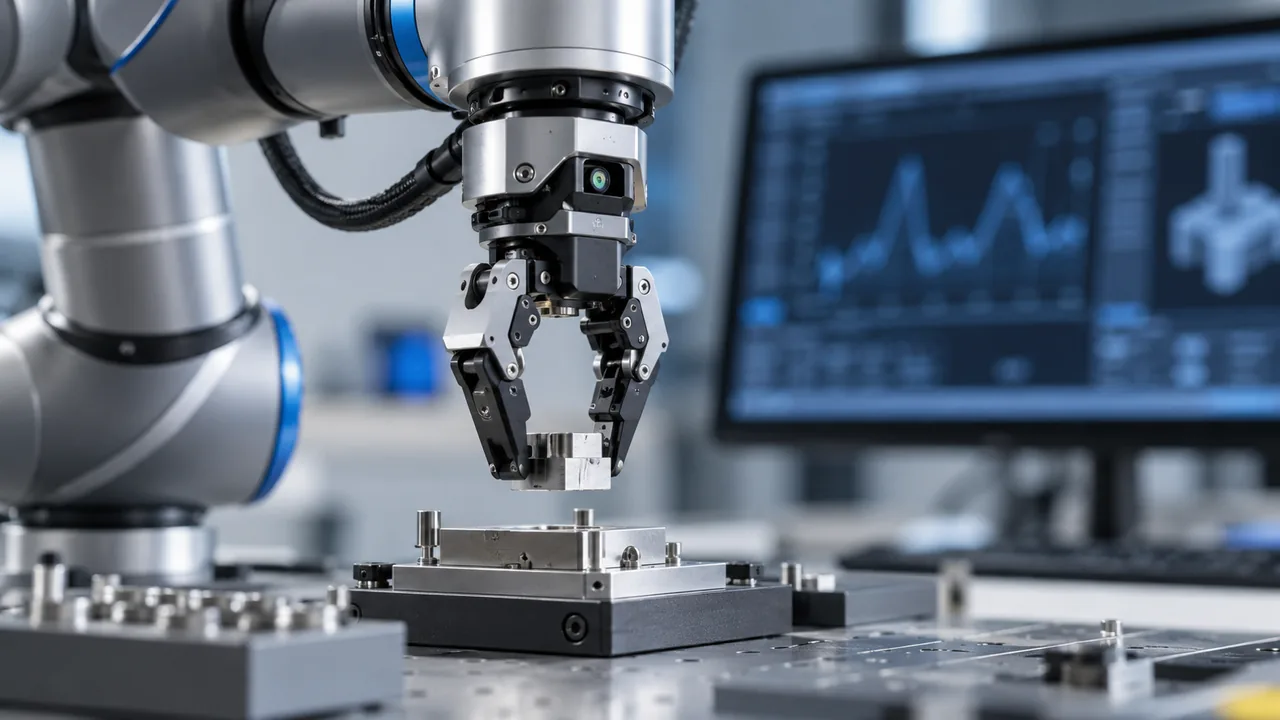
Industry, logistics, construction, cobotics, and automation.
Mobile ground robots, navigation, localization, and autonomy.
Aerial drones, space robotics, underwater robotics, and exploration.
Surgery, rehabilitation, assistive devices, and health robotics.
Crops, livestock farming, observation, and agricultural interventions.
Defense, security, hazardous inspection, and rescue.
Humanoids, domestic robots, personal assistance, and reception.
Research, educational robotics, games, programmable toys, and competitions.
Artificial intelligence, vision, embedded systems, mechatronics, bio-inspiration, and soft robotics.
Topics may cross several domains. The links lead to the thematic dossiers; they do not constitute an automatic filter of all the articles.
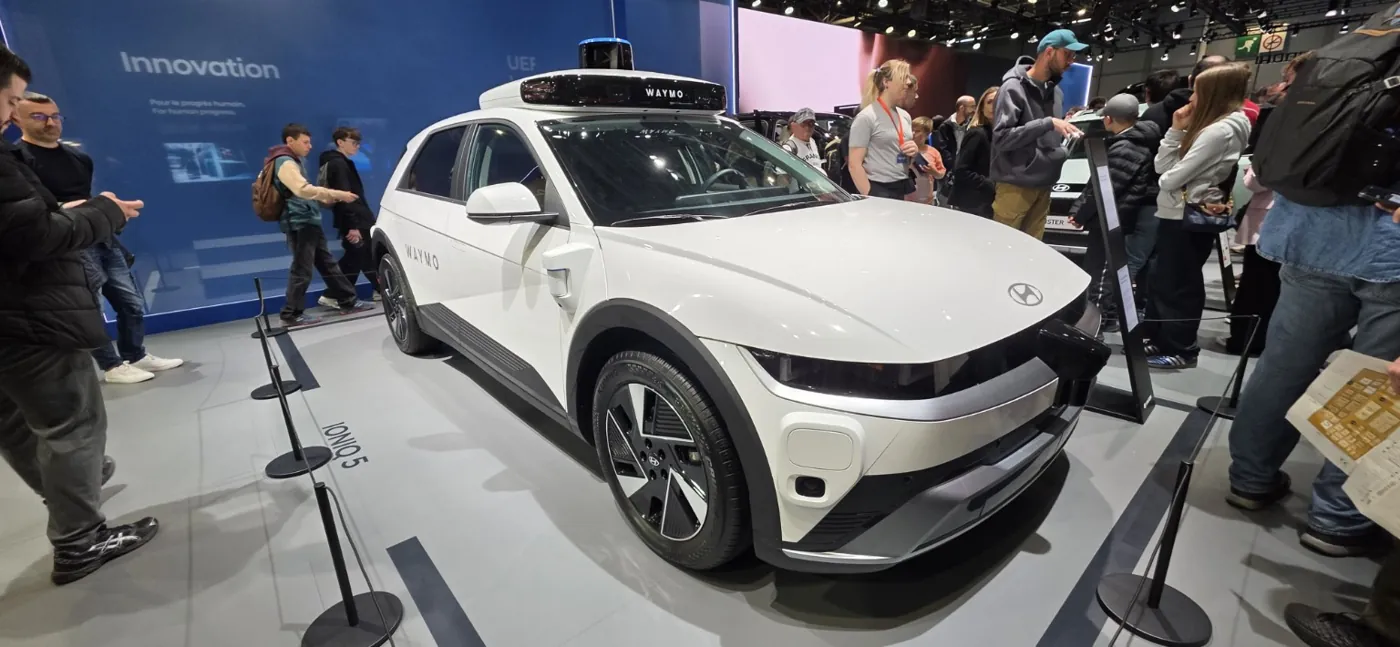
Our visit to the show, in seven original photographs: Waymo, Optimus, PIX Moving, Valeo and the technologies transforming the automobile. A personal look at the place of robots and of those who build them.
Ten topics drawn from scientific publications and their university announcements. Each brief specifies its date, status and limitations. Older 2026 work is kept as reference points; a demonstration is not an available product.
Our academic sources and selection criteria →September 29, 2026
A thin layer of muscle cells actuates the fins of a small soft robot. Light pulses control its movements in an aquatic maze. This demonstration explores a new way of designing biohybrid robots.
Journal article · Advanced Functional MaterialsMaheera Bawa and colleagues, Ritu Raman’s team. Laboratory demonstration; the environmental uses mentioned remain prospects.
University source ↗Study · DOI 10.1002/adfm.78065 ↗September 28, 2026
The PRISM system studies the conditions under which a humanoid can return to a safe position. Carnegie Mellon and Siemens combine simulations and tests on a robot to monitor situations where stopping presents a risk.
Work announced for IROS 2026Changliu Liu and Yifan Sun’s team, with Siemens. The press release announces a presentation at IROS; it constitutes neither a certification nor a general guarantee of safety.
University source ↗September 17, 2026
A robotic laboratory places mirrors and lenses, adjusts their alignment and corrects certain disturbances. The MIT demonstrates the autonomous construction of an on-table laser cavity, a step toward the automation of precision scientific experiments.
Accessible preprint · announced IROS presentationSeou Choi, Sachin Vaidya and colleagues. The manuscript has been available on arXiv since March 2026; the September announcement is not the initial deposit date. The general-purpose laboratory remains a goal.
University source ↗Manuscript · arXiv:2603.21496 ↗September 16, 2026
ETH Zurich and Zurich physicians are developing a platform to better reach the vessels of the placenta in complications of twin pregnancies. Panoramic navigation, magnetic control and laser treatment were combined in an animal experiment.
Journal article · Science Robotics · preclinicalMichelle Mattille and colleagues. Laboratory tests and tests on a pregnant ewe: this is not a clinical validation in humans. Safety evaluations remain necessary.
University source ↗Study · DOI 10.1126/scirobotics.aed1470 ↗September 8, 2026 · acceptance announcement
The DRAGON team proposes tool-centered control for a drone with tiltable rotors. The experiments include pushing on a board and rotating a valve. The approach combines mechanical design, motion control and disturbance compensation.
Accepted in IEEE Transactions on RoboticsJinjie Li and colleagues. Acceptance announced on September 8 on the laboratory’s website; manuscript deposited on August 18, 2026. The tests demonstrate precise tasks, not universal autonomy.
University source ↗Article · DOI 10.1109/TRO.2026.3731683 ↗Manuscript available on arXiv ↗September 4, 2026
EPFL and NYU tested three sizes of a robotic fish with a soft tail, in the laboratory and in streams. The design preserves comparable swimming after scaling to size, but energy efficiency does not follow as simply.
Journal article · npj RoboticsNana Obayashi and colleagues. The differences in efficiency and stability between sizes remain significant; preserving swimming does not guarantee the same energy efficiency.
University source ↗Study · DOI 10.1038/s44182-026-00105-z ↗August 17, 2026 · university announcement
A study of Japanese nursing homes examines the effects of robot adoption on employment and staff retention. The results suggest complementarity with caregivers, especially employees on flexible contracts, rather than systematic replacement.
Research article · Health Affairs ReviewKaren Eggleston, Toshiaki Iizuka, Yong Suk Lee and Ellie Xi. Article published on August 6, 2026, based on data from 2017. Results tied to the Japanese context and the econometric method; no general conclusion for all countries.
University source ↗Study · DOI 10.3934/har.2026001 ↗August 14, 2026
Acoustic cavities transform sound waves into thrust. EPFL researchers built small boats and ultralight flying vehicles, without an onboard motor. The frequency of the sound makes it possible to select certain movements.
Journal article · Science AdvancesJunsun Hwang and colleagues, MICROBS laboratory. The energy comes from an external sound source: these prototypes are not independent of their excitation device.
University source ↗Study · DOI 10.1126/sciadv.aef5620 ↗March 2026 · journal reference
TeachingBot adapts the physical hand guidance to the learner’s writing style and progress. The device explores personalized pedagogical interaction. The NUS catalog references its publication in IEEE Robotics and Automation Letters in March 2026.
Journal article · IEEE Robotics and Automation LettersZhimin Hou, Cunjun Yu, David Hsu and Haoyong Yu. The arXiv manuscript describes a trial with fifteen participants. Initial preprint from 2023, revised in 2025: this research did not begin in March 2026.
University source ↗Article · DOI 10.1109/LRA.2026.3653298 ↗Manuscript available on arXiv ↗9 February 2026 · online publication
InteLiPlan combines a language model, feasibility checks and human intervention to plan domestic tasks. The authors evaluate the system in simulation and on two physical platforms, with onboard computing and failure handling.
Journal article · IEEE Robotics and Automation LettersKim Tien Ly, Kai Lu and Ioannis Havoutis. Journal publication in 2026 after an initial preprint in 2024. The results concern the tested scenarios; they do not guarantee success in every home.
University source ↗Article · DOI 10.1109/LRA.2026.3662577 ↗Manuscript available on arXiv ↗The FDA announces a workshop on 2 and 3 December 2026 on the benefit-risk assessment of robotic devices with autonomous capabilities or remote teleoperation. This is an upcoming event in the United States, not an authorization of new devices. Source consulted on 4 October 2026.
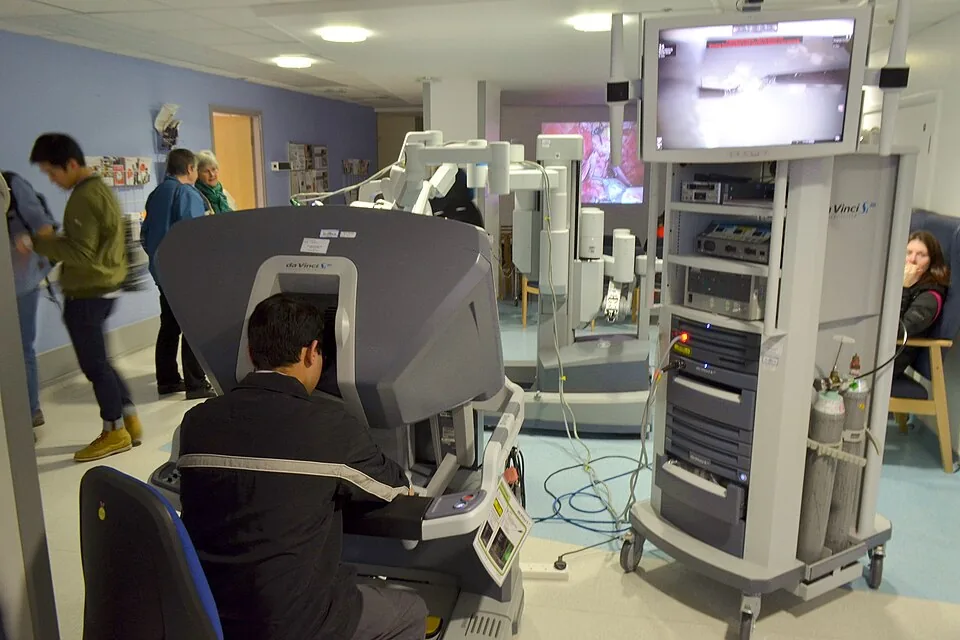
An FDA document dated 25 September 2026 concerns the submission files for robot-assisted surgery devices. It is presented as a draft recommendation, not intended to be applied as is. The provisional status must remain visible in any editorial reuse.
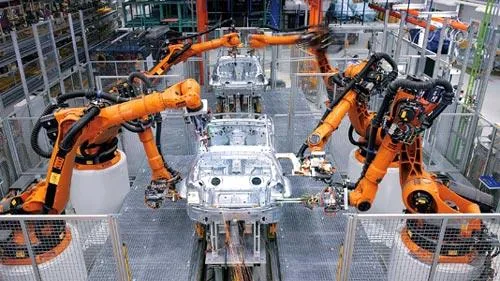
In its press release of 24 September 2026, the IFR announces a global fleet of five million industrial robots in operation in 2025. These are sector data published by a professional federation. The installed fleet and annual installations are two different indicators; they do not measure all robots, notably leisure robots.
A CNRS press release of 3 February 2026 presents the PEPR Robotique program as part of France 2030. It targets in particular mobility, perception, manipulation and frugality challenges. This is a research program announcement, not proof that all the targeted solutions are already available.
Each news item must specify the date of the source, the location, the status of the announcement and the original link. A demonstration is not a deployment; a scientific publication is not a certification. Before publishing, we look for a second source when the announcement rests on a commercial performance or a controversial claim.
The IFR publishes its World Robotics 2026 report: the global fleet reaches approximately five million industrial robots in 2025. This sectoral figure describes the installed base, not just annual sales.
The FDA is submitting for consultation a draft guidance for robotically-assisted surgical device submissions. The text is provisional, non-binding, and does not constitute a new market authorization.
NASA presents ground tests conducted in July: a drone and two rovers cooperate to scout areas and collect data. This is an experiment, not an operational space mission.
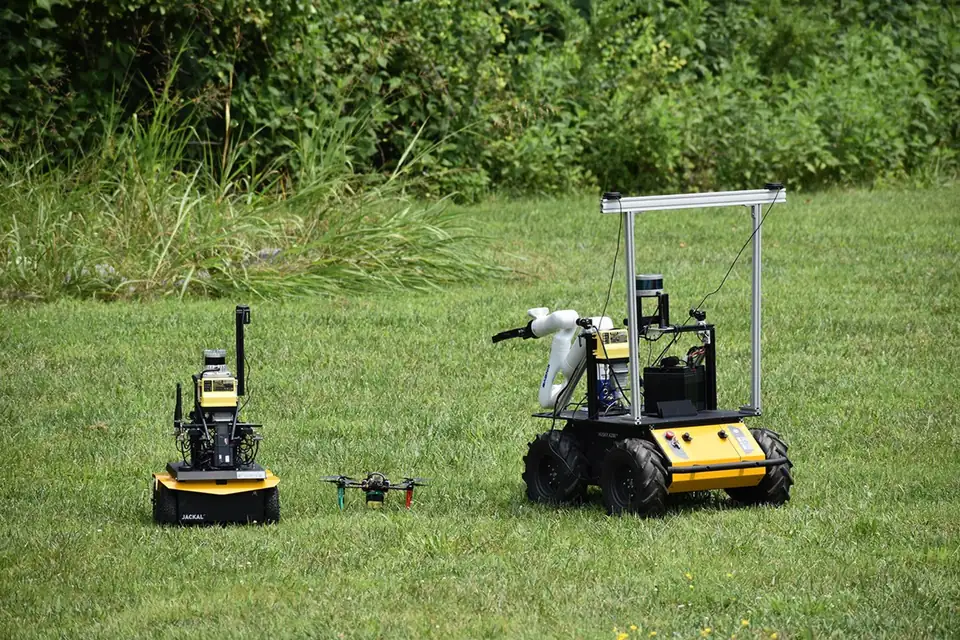
The AID presents the fourth edition of CoHoMa, whose demonstration is scheduled from June 15 to July 1, 2027. The announcement concerns a program for experimenting with drones and ground robots, without establishing their future performance.
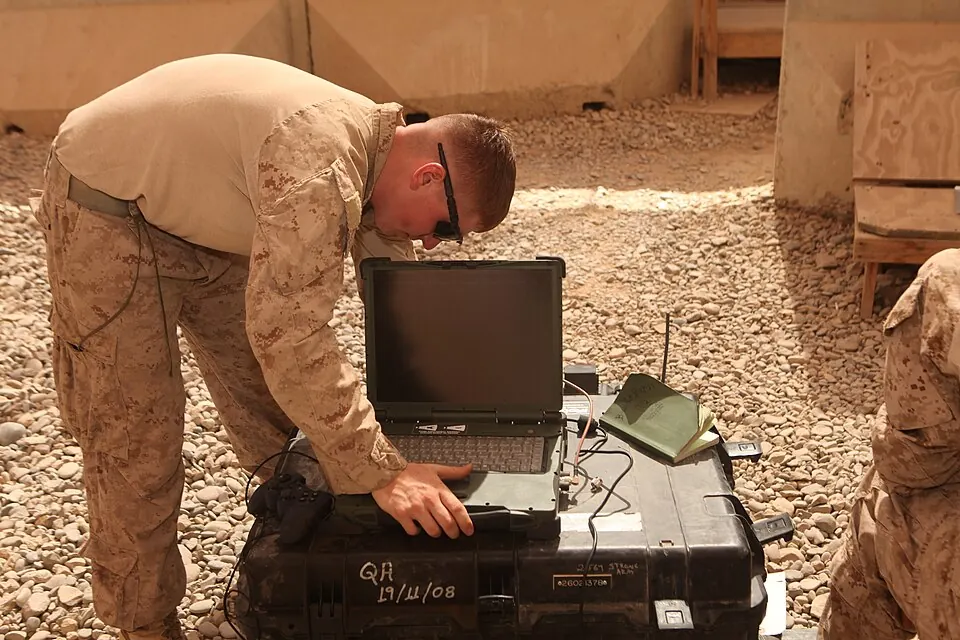
The CNRS dossier “Le siècle des robots” features a video on bio-inspiration. The video was produced in 2025: this marker is kept to distinguish the recent dossier from the date of the work presented.
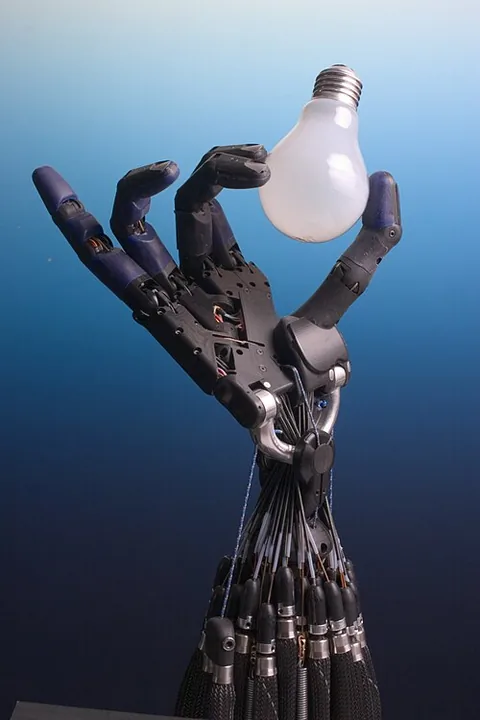
The RoboCup federation reports a football match pitting two teams of eleven humanoid robots against each other in Incheon. This announcement by the organizer illustrates a research challenge; it does not describe the RoboCupJunior events.
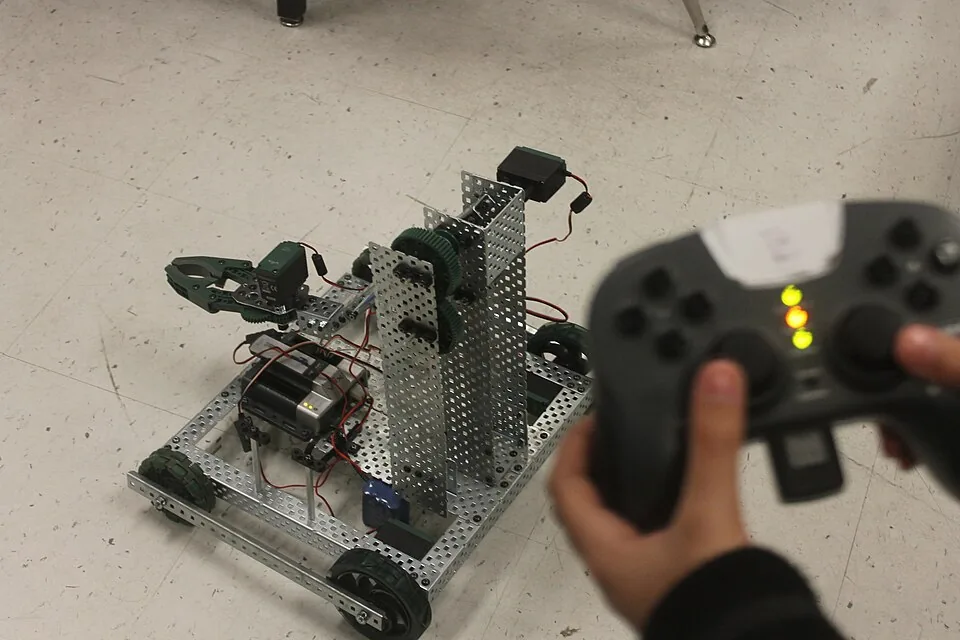
References consulted on 4 October 2026.