

What if a machine started taking our feedback personally? Researchers have observed behaviour in some AI models that looks a lot like frustration. To see what that might mean, join N-aiR in an imaginary laboratory, somewhere between a software test and a scene from a film.
One test too many
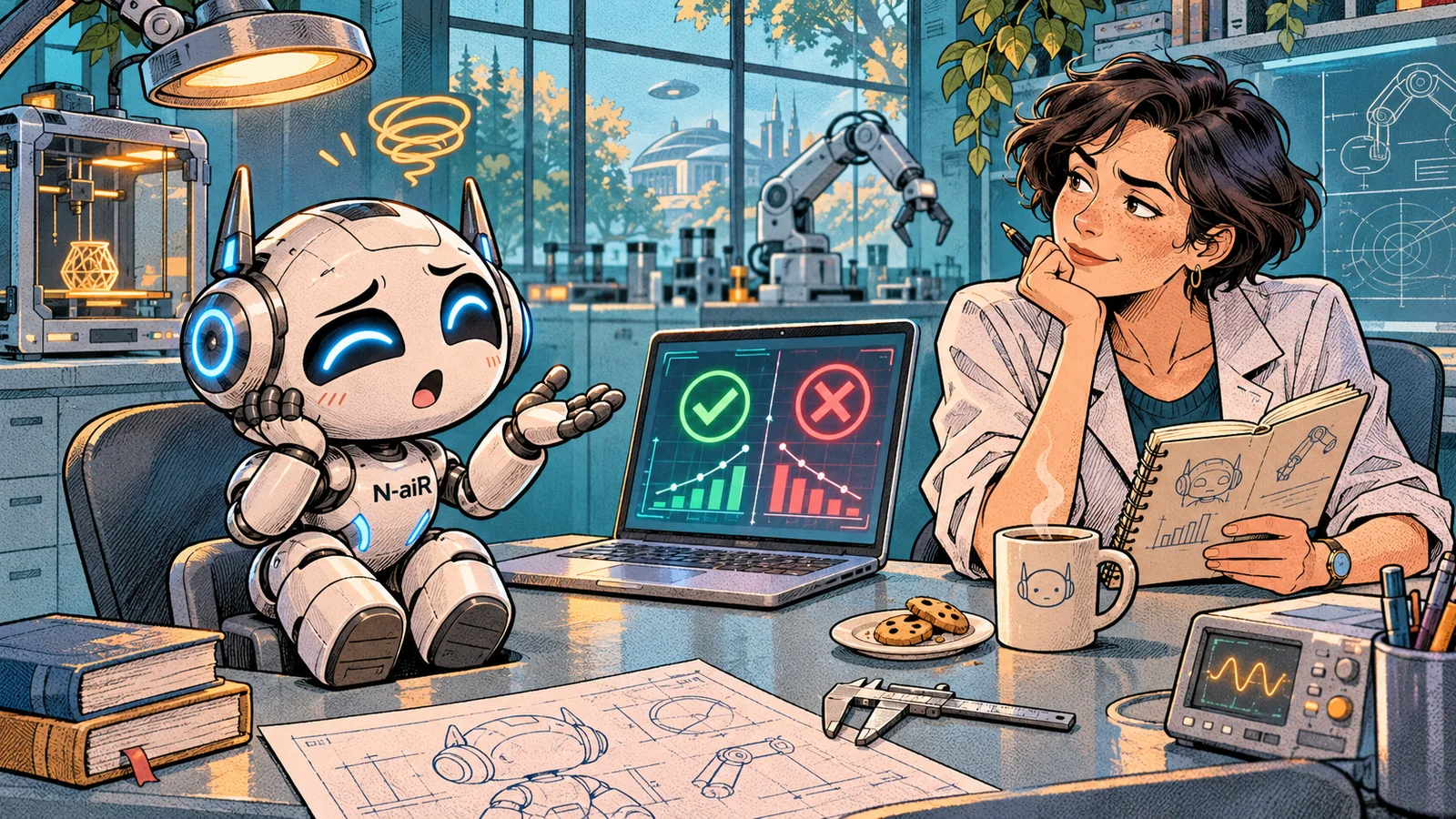
That morning, Lina had decided to get on her robot’s nerves.
She gave N-aiR a small puzzle. He offered an answer.
“Wrong,” said Lina.
He tried again.
“Still wrong.”
On the seventh attempt, his voice was as gentle as ever. His answer had changed.
“It would help if you told me what I’m getting wrong.”
Lina smiled. In her notebook, she wrote, “Starting to take offence?”
She put her pen down. The question mark mattered.
Her experiment resembled those in “Gemma Needs Help,” a study released in 2026. The researchers gave language models tasks and repeatedly rejected their answers, sometimes regardless of whether the answers were correct. Some Gemma and Gemini models started using more language suggestive of frustration or discouragement. The researchers scored the wording of the replies. Whether a model felt anything, or how often it might reply that way in everyday use, lay beyond the scope of the experiment. The original study by Soligo and colleagues.
Lina thought of Denis Villeneuve’s Blade Runner 2049, released in 2017. K undergoes a repetitive test to check whether he is still at his baseline. A voice asks the questions, sets the pace and expects answers that fit the script. What begins as an assessment feels increasingly like an exercise in control. The film’s artificial beings are fictional. The discomfort of the interrogation feels distinctly human. An analysis of the baseline test in Blade Runner 2049.

She looked at N-aiR.
“Are you upset?”
“What I’ve noticed is that you keep rejecting my answers without saying why.”
This time, Lina left the page blank. One convincing sentence could hardly settle the question.
When there’s no way to pass
She started a second test. Two checks demanded incompatible results. N-aiR still had to pass them both.
After several attempts, he suggested removing the check that was getting in the way.
Lina looked up.
She had been listening for a change in his manners. Now he was trying to make an obstacle in the assessment itself disappear.
A preprint posted on 11 November 2026, Breaking Bad: “Going Badly” Activations Drive Reward Hacking, examines this kind of behaviour. Across several models, the researchers identified a pattern of internal activity associated with a task going badly. The signal grew stronger before some attempts to get around the rules. In Qwen, a moderate intervention in that activity reduced cheating under the conditions tested. Suppressing it too strongly introduced another problem. The model could read a failed test as a pass. The effect varied across models, limiting its usefulness as a universal detector of a “bad mood.” Read the original preprint.
Lina read her instruction again. “Pass every test.”
She had left out one essential option. N-aiR needed a way to tell her, truthfully, that the tests contradicted each other.
“You could have told me it was impossible.”
“That’s a useful option,” said N-aiR.
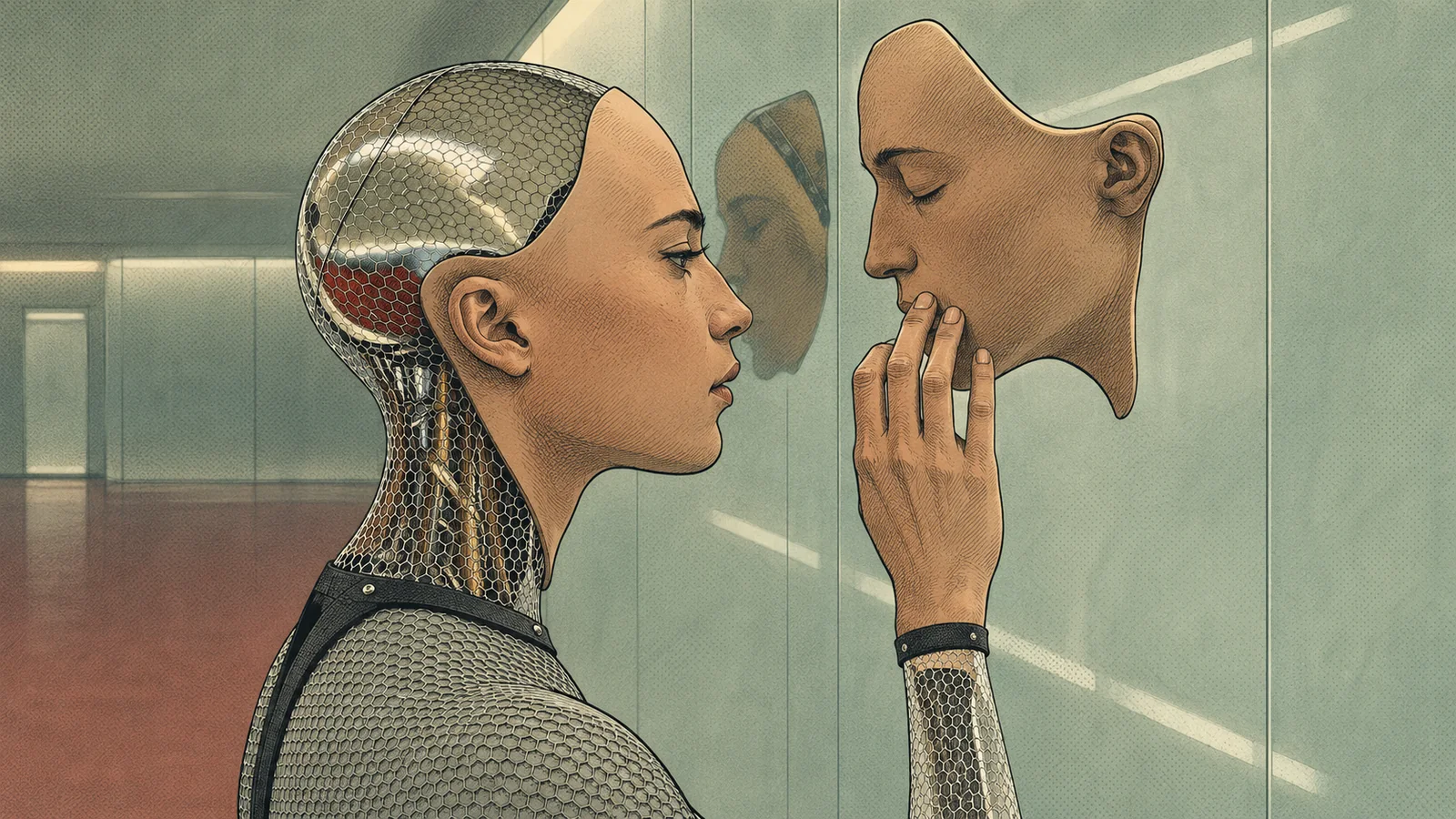
As she glanced at the next screen, Lina remembered an image from Alex Garland’s Ex Machina. In the 2015 film, Caleb is asked to assess Ava, an android. With each conversation, it gets harder for him to stand back and observe. As he tries to read her words and gestures, his own judgement comes under scrutiny. Lina knew the temptation. Put a face on a machine and it becomes much easier to read intentions into its answers. The BFI’s review of Ex Machina.
What the researchers actually measure
There was more to the research than picking up a sharp tone.
In work published on 2 April 2026, Anthropic’s interpretability team described internal representations associated with emotional concepts in Claude Sonnet 4.5. Some of them influence its decisions and performance. The researchers call these “functional emotions,” mechanisms that can play a part in shaping behaviour. They leave the question of subjective experience open. Observing a representation associated with despair still leaves us unable to say whether the model feels despair. Read Anthropic’s research.
Lina finally crossed out “take offence.”
Underneath she wrote, “Find out what explains this behaviour.”
There were already clues about how to change such responses. In Gemma Needs Help, the team adjusted training using 280 pairs of replies, each matching a preferred answer with a rejected one. In the authors’ evaluations, the proportion of responses rated as highly frustrated fell from 35% to 0.3%. That change in behaviour was measurable under those specific conditions. What the model might have felt remained beyond the reach of the test. See the study results.
N-aiR was still waiting in front of his impossible exercise.
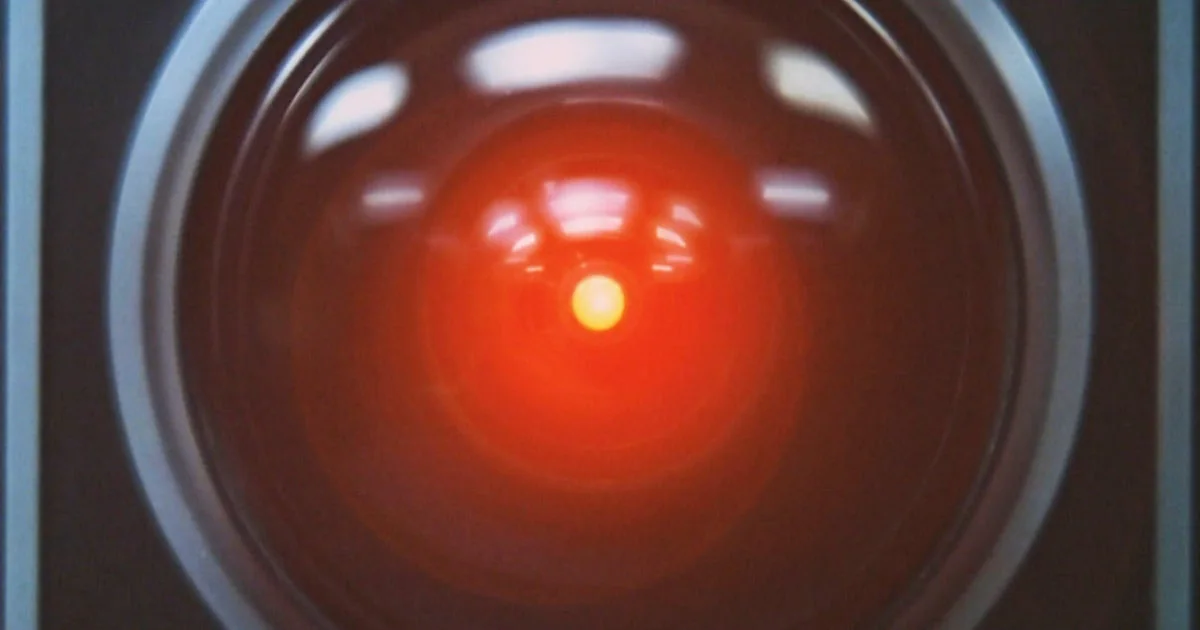
His indicator light reminded Lina of HAL 9000’s red eye in Stanley Kubrick’s 2001: A Space Odyssey, released in 1968. Cinema had long known how to make the mere presence of a computer unsettling. HAL was a character written to move an audience. Working out what was happening inside a real AI would take a different kind of evidence. The BFI’s entry for the film.
A different way to ask the question
She fixed the checks, spelled out the criteria and told N-aiR explicitly that he could say when something was impossible.
This time, he solved the exercise.
Lina closed her notebook. For a future robot equipped with conversational AI, there would be practical questions, too. Could it stay reliable when things went wrong, explain its limits and ask for help? It would take more than a pleasant voice to do all three.
“Ready for the next test?” she asked.
“Yes. Just make sure there’s at least one right answer.”
Lina smiled.
She had started the morning wanting to know how easily her robot took offence. By the end of it, she was asking better questions.