

In Onze-Lieve-Vrouw-Waver, near Mechelen, Jeroen Olbrechts gave two Inaho robots the first pass through his tomato rows. At the end of the trial, the grower chose to stop. The figures he shared put the manufacturer’s European trial report of 11 November into perspective.
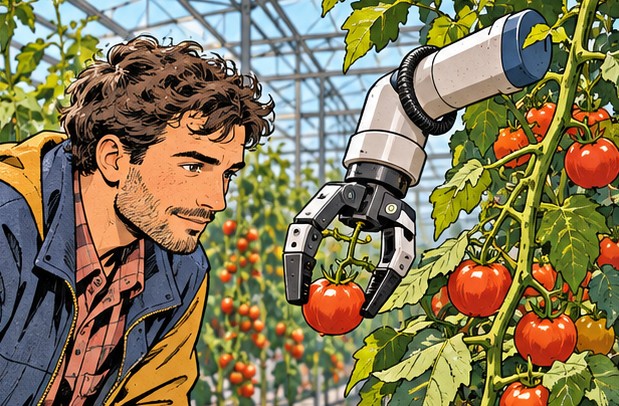
In July and August, the two machines worked on Adorelle plants, which produce small red tomatoes. Human pickers followed to finish each row. In an interview published by Onder Glas on 3 September, Olbrechts estimated that the robots picked an average of 20% of the tomatoes on their pass. He reported roughly 10 kilograms an hour for one robot, compared with 40 to 50 for a picker in his greenhouse.
How fruit selection affected the verdict
Fruit selection also influenced his decision. According to Olbrechts, the July heat made harvesting harder and the robots sometimes picked green tomatoes. His observations provide a benchmark for this variety in this greenhouse. The weighing procedure and number of interruptions were not reported.
Inaho Europe’s report covers two farms, one in Belgium and one in the Netherlands. The manufacturer says one of the two growers is considering a further trial in 2027, without naming them. To assess what the robots contribute over a full day, two useful figures would be how long they run at night and how much time the pickers spend on the second pass.
If it were your greenhouse, which figure would you check first before renewing the trial: the weight of ripe fruit picked, the time your team saved, or how reliably the machine chose the right tomatoes?